
MSDS of bitumen 40/50
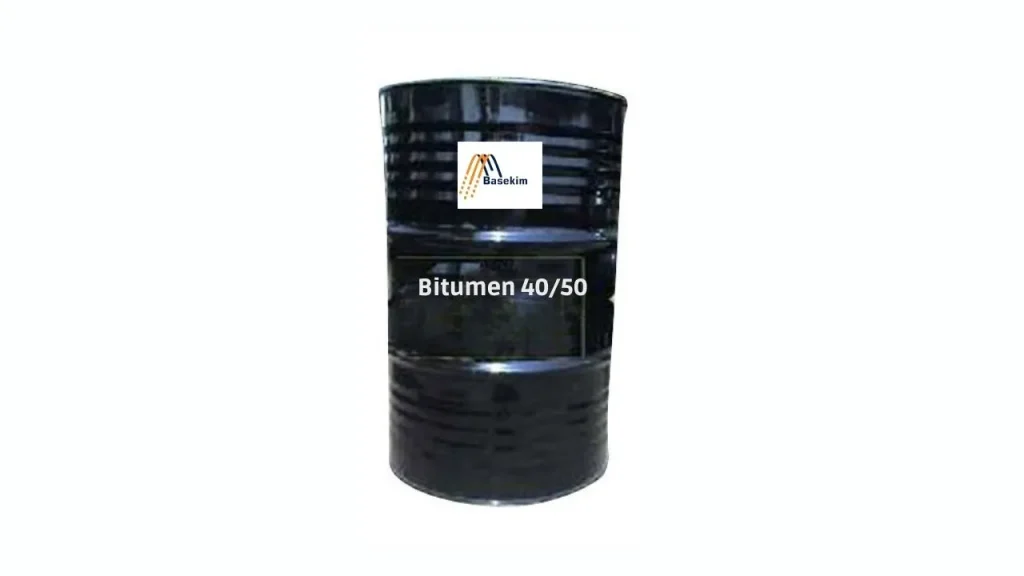
Introduction: Why Bitumen 40/50 Matters
In road construction, material selection directly affects strength, durability, and safety. That’s why many engineers and contractors turn to Asphalt 40/50, also called paving-grade bitumen or penetration grade 40/50. It offers the perfect balance of hardness and flexibility, especially in hot regions like the UAE and Turkey.
Since it resists deformation even under extreme heat, Bitumen 40/50 ensures longer-lasting roads. Furthermore, it supports better bonding between asphalt layers, which improves pavement performance over time.
What Is Bitumen 40/50?
Bitumen 40/50 is a semi-solid hydrocarbon used widely in road paving and waterproofing. Its name comes from its penetration value, which falls between 40 and 50 (measured in tenths of a millimeter). This means it’s harder than softer grades like 60/70, making it perfect for high-stress environments.
Not only does it resist softening under heat, but it also provides superior adhesion to aggregates. As a result, it is ideal for roads that see heavy traffic or face high temperatures daily.
Key Properties
To better understand its value, let’s look at its most important features:
Penetration Index: 40–50 dmm
Softening Point: 48°C to 56°C
Flash Point: Above 250°C
Ductility: Minimum 100 cm
Solubility: More than 99% in trichloroethylene
Because of these specifications, Asphalt 40/50 remains stable even under harsh construction conditions. Moreover, it doesn’t lose strength quickly, which reduces long-term maintenance costs.
Where Is Asphalt 40/50 Used?
Bitumen 40/50 is mainly used in infrastructure projects where heat resistance and load capacity are critical. These include:
Highways and expressways
Airport runways
Urban roadways
Bridges and overpasses
Foundation waterproofing
In both UAE and Turkey, the road networks are growing fast. Consequently, engineers need materials that can withstand tough environments without failure. Bitumen 40/50 meets these needs with ease.
Why Choose asphalt 40/50 Over Other Grades?
While softer grades like 60/70 may be cheaper, they don’t perform well in hot climates. Their lower softening point makes them prone to rutting and cracking under traffic.
On the other hand, Bitumen 40/50:
Withstands higher surface temperatures
Holds up better under pressure
Offers greater lifespan per kilometer of road
Requires fewer repairs over time
For this reason, many government projects now mandate the use of penetration grade 40/50 for main road construction.
Safety Considerations When Using Bitumen 40/50
Because Bitumen 40/50 is heated during use, safety must come first. Therefore, workers must follow several precautions:
Thermal Safety
Durable road bitumen is typically heated to 150–180°C during application. Direct contact at this temperature can cause serious burns. Thus, operators should wear insulated gloves, boots, and long-sleeved gear.
Fume Management
When heated, bitumen may release gases such as hydrogen sulfide (H₂S). While these fumes are usually low-level, poor ventilation can create a serious hazard. Therefore, always work in open or well-ventilated areas.
Spill and Fire Prevention
Since the flash point is over 250°C, the material is relatively safe to heat. However, open flames nearby can still ignite it. Always ground all equipment and avoid smoking or sparks near the material.
Proper Storage and Handling of Bitumen 40/50
Handling this material requires strict control to prevent accidents. Fortunately, safe handling is simple if the following practices are followed:
Store in closed, labeled drums or heated tanks.
Keep containers in shaded areas away from direct sunlight.
Prevent water contamination—mixing water with hot bitumen causes explosive splattering.
Regularly inspect equipment and pipelines for leaks or corrosion.
Above all, always train staff on emergency response protocols.
Transporting Asphalt 40/50 in the UAE and Turkey
Because roads in the UAE and Turkey face extreme temperatures, bitumen must be transported using specialized trucks. Basekim ensures bitumen is delivered in:
UN 3257-compliant tankers
Heated ISO containers
Drums for smaller projects
Moreover, Basekim tracks shipments in real-time and provides all required MSDS (Material Safety Data Sheets) for each batch.
Why Basekim Is a Leading Supplier of Bitumen 40/50
Not every supplier can meet the volume, speed, and quality required by large-scale road projects. Fortunately, Basekim specializes in the logistics and bulk delivery of asphalt 40/50 across the Middle East and Europe.
Here’s why clients choose Basekim:
Guaranteed compliance with EN 12591 and ASTM D946 standards
Custom packaging for both large and small orders
Quick delivery to UAE, Turkey, and neighboring regions
Technical support available 24/7
So, whether you need 200 drums or several tankers, Basekim ensures reliable supply with full certification.
Sustainability: Managing Bitumen 40/50 Waste
Today, governments encourage sustainable construction. Although bitumen itself is not biodegradable, it can be reused or burned safely as fuel in cement kilns.
Here are responsible practices:
Recycle scrap bitumen where possible
Never dump waste into sewers or soil
Use absorbents for small spills and dispose in sealed containers
Keep documentation for all waste shipments
In short, when handled responsibly, bitumen use aligns well with today’s eco-standards.
Case Study: UAE Highway Project
In 2024, a major highway linking Abu Dhabi to Al Ain used over 6,000 tons of Asphalt 40/50 supplied by Basekim. The engineers reported:
Excellent surface durability under desert heat
Reduced deformation after 6 months of heavy trucking
No early cracking or rutting, even during peak summer
Because of this success, the Ministry of Infrastructure is planning to use Asphalt 40/50 in future national roads.
Looking Ahead: Innovations in Bitumen
While Bitumen 40/50 remains a top performer, new technologies are emerging. Polymer-modified bitumen and crumb rubber asphalt offer even better elasticity and durability.
However, for standard highways and urban roads, Asphalt 40/50 still delivers the best value for cost and performance. As regulations tighten, suppliers like Basekim continue to improve formulations and reduce environmental impact.
Lastly: Build Stronger Roads
In summary, Bitumen 40/50 is the ideal solution for demanding road projects in the UAE and Turkey. Thanks to its heat resistance, long life, and bonding power, it outperforms softer grades in nearly every way.
Combined with Basekim’s reliable supply chain, this material guarantees safety, strength, and efficiency for infrastructure projects of any size.
The Preferred Grade for Roads in the UAE and Turkey
Meta Description: Bitumen 40/50 is ideal for road construction in hot climates like the UAE and Turkey. Learn its key properties, applications, and why Basekim is the supplier professionals trust.
Introduction: Why Bitumen 40/50 Matters
In road construction, material selection directly affects strength, durability, and safety. That’s why many engineers and contractors turn to Bitumen 40/50, also called paving-grade bitumen or penetration grade 40/50. It offers the perfect balance of hardness and flexibility, especially in hot regions like the UAE and Turkey.
Since it resists deformation even under extreme heat, Bitumen 40/50 ensures longer-lasting roads. Furthermore, it supports better bonding between asphalt layers, which improves pavement performance over time.
What Is Bitumen 40/50?
Bitumen 40/50 is a semi-solid hydrocarbon used widely in road paving and waterproofing. Its name comes from its penetration value, which falls between 40 and 50 (measured in tenths of a millimeter). This means it’s harder than softer grades like 60/70, making it perfect for high-stress environments.
Not only does it resist softening under heat, but it also provides superior adhesion to aggregates. As a result, it is ideal for roads that see heavy traffic or face high temperatures daily.
Key Properties
To better understand its value, let’s look at its most important features:
Penetration Index: 40–50 dmm
Softening Point: 48°C to 56°C
Flash Point: Above 250°C
Ductility: Minimum 100 cm
Solubility: More than 99% in trichloroethylene
Because of these specifications, Bitumen 40/50 remains stable even under harsh construction conditions. Moreover, it doesn’t lose strength quickly, which reduces long-term maintenance costs.
Where Is Bitumen 40/50 Used?
Bitumen 40/50 is mainly used in infrastructure projects where heat resistance and load capacity are critical. These include:
Highways and expressways
Airport runways
Urban roadways
Bridges and overpasses
Foundation waterproofing
In both UAE and Turkey, the road networks are growing fast. Consequently, engineers need materials that can withstand tough environments without failure. Bitumen 40/50 meets these needs with ease.
Why Choose Bitumen 40/50 Over Other Grades?
While softer grades like 60/70 may be cheaper, they don’t perform well in hot climates. Their lower softening point makes them prone to rutting and cracking under traffic.
On the other hand, Bitumen 40/50:
Withstands higher surface temperatures
Holds up better under pressure
Offers greater lifespan per kilometer of road
Requires fewer repairs over time
For this reason, many government projects now mandate the use of penetration grade 40/50 for main road construction.
Safety Considerations When Using Bitumen 40/50
Because Bitumen 40/50 is heated during use, safety must come first. Therefore, workers must follow several precautions:
Thermal Safety
Bitumen is typically heated to 150–180°C during application. Direct contact at this temperature can cause serious burns. Thus, operators should wear insulated gloves, boots, and long-sleeved gear.
Fume Management
When heated, bitumen may release gases such as hydrogen sulfide (H₂S). While these fumes are usually low-level, poor ventilation can create a serious hazard. Therefore, always work in open or well-ventilated areas.
Spill and Fire Prevention
Since the flash point is over 250°C, the material is relatively safe to heat. However, open flames nearby can still ignite it. Always ground all equipment and avoid smoking or sparks near the material.
Proper Storage and Handling of Bitumen 40/50
Handling this material requires strict control to prevent accidents. Fortunately, safe handling is simple if the following practices are followed:
Store in closed, labeled drums or heated tanks.
Keep containers in shaded areas away from direct sunlight.
Prevent water contamination—mixing water with hot bitumen causes explosive splattering.
Regularly inspect equipment and pipelines for leaks or corrosion.
Above all, always train staff on emergency response protocols.
Transporting Bitumen 40/50 in the UAE and Turkey
Because roads in the UAE and Turkey face extreme temperatures, bitumen must be transported using specialized trucks. Basekim ensures bitumen is delivered in:
UN 3257-compliant tankers
Heated ISO containers
Drums for smaller projects
Moreover, Basekim tracks shipments in real-time and provides all required MSDS (Material Safety Data Sheets) for each batch.
Why Basekim Is a Leading Supplier of Bitumen 40/50
Not every supplier can meet the volume, speed, and quality required by large-scale road projects. Fortunately, Basekim specializes in the logistics and bulk delivery of asphalt 40/50 across the Middle East and Europe.
Here’s why clients choose Basekim:
Guaranteed compliance with EN 12591 and ASTM D946 standards
Custom packaging for both large and small orders
Quick delivery to UAE, Turkey, and neighboring regions
Technical support available 24/7
So, whether you need 200 drums or several tankers, Basekim ensures reliable supply with full certification.
Sustainability: Managing Bitumen 40/50 Waste
Today, governments encourage sustainable construction. Although bitumen itself is not biodegradable, it can be reused or burned safely as fuel in cement kilns.
Here are responsible practices:
Recycle scrap bitumen where possible
Never dump waste into sewers or soil
Use absorbents for small spills and dispose in sealed containers
Keep documentation for all waste shipments
In short, when handled responsibly, bitumen use aligns well with today’s eco-standards.
Case Study: UAE Highway Project
In 2024, a major highway linking Abu Dhabi to Al Ain used over 6,000 tons of Bitumen 40/50 supplied by Basekim. The engineers reported:
Excellent surface durability under desert heat
Reduced deformation after 6 months of heavy trucking
No early cracking or rutting, even during peak summer
Because of this success, the Ministry of Infrastructure is planning to use Bitumen 40/50 in future national roads.
Looking Ahead: Innovations in Bitumen
While Bitumen 40/50 remains a top performer, new technologies are emerging. Polymer-modified bitumen and crumb rubber asphalt offer even better elasticity and durability.
However, for standard highways and urban roads, penetration grade 40/50 still delivers the best value for cost and performance. As regulations tighten, suppliers like Basekim continue to improve formulations and reduce environmental impact.
Lastly: Build Stronger Roads with Bitumen 40/50
In summary, Bitumen 40/50 is the ideal solution for demanding road projects in the UAE and Turkey. Thanks to its heat resistance, long life, and bonding power, it outperforms softer grades in nearly every way.
Combined with Basekim’s reliable supply chain, this material guarantees safety, strength, and efficiency for infrastructure projects of any size.